Released Mugshots as Records
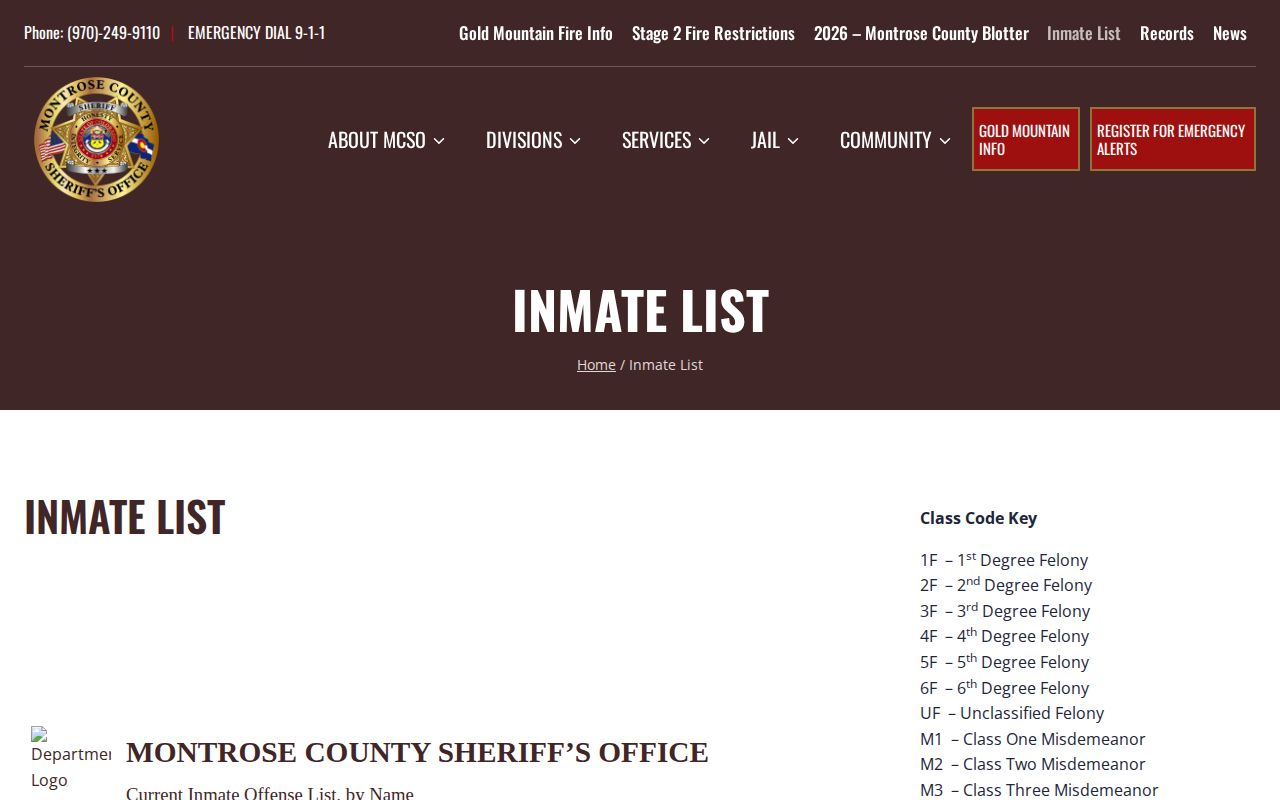
A booking photo is created as part of an arrest or jail booking record. Release does not erase the historical booking event, but it often removes the person from a current-custody roster. That is the central problem in Ouray County: the practical online jail channel is Montrose County Jail, and the public inmate list is a current-inmate list rather than a released-person mugshot archive.
Colorado jail, sheriff, and court records are governed by layered access rules. Ouray's fee sheet cites CORA, CCJRA, and C.R.S. 24-72-306 for sheriff records review, redaction, and release. It also says records may be withheld, redacted, or unavailable under state law, active investigations, privacy protections, or court order. Do not assume every booking photo is available online or releasable on request.
Where an Ouray Mugshot Appears
Use official sources first. A photo found on a third-party site can be stale, commercially framed, or detached from the current court status. The table below separates the channels that can help from the channels that were not confirmed as released-mugshot feeds.
| Channel | Has photo? | How to access |
|---|---|---|
| Montrose current inmate list | No photo confirmed in captured text; current custody only | Search the current list, then confirm release with jail records if the name drops off |
| Ouray Sheriff records request | Possible if the photograph is held and releasable | Use the official records request form; photographs and digital media are listed categories |
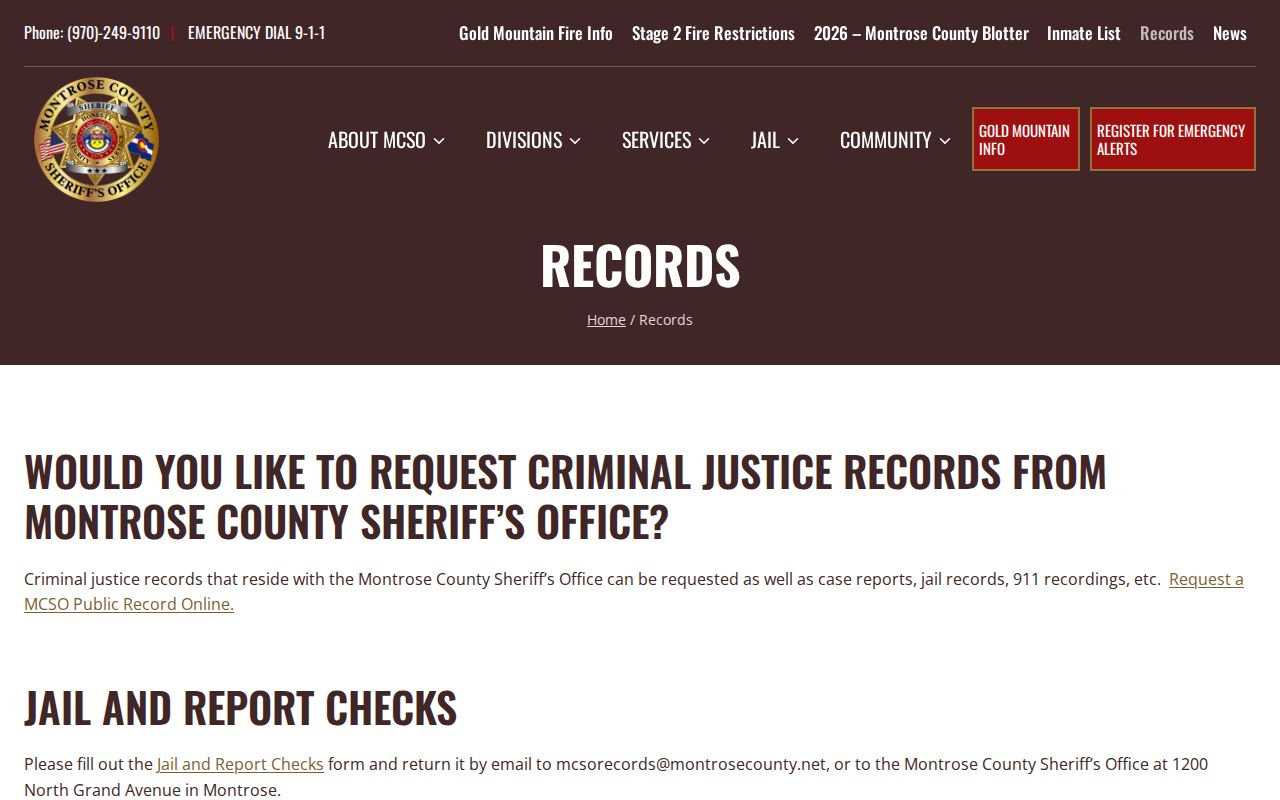
| Montrose Sheriff's records process | Possible for jail records and any releasable booking photo | Request jail records or report checks through Montrose records |
| CDOC offender search | Only for state offenders if the live record includes a photo | Search CDOC for state-prison release, parole, or discharge cases |
| CBI sex offender registry | For qualifying registrants only | Use the CBI registry or Ouray's local in-person registry access path |
| News, blotter, or social posts | Sometimes, but not a custody database | Use only as dated context and verify against jail, court, VINE, or DOC records |
Requesting a Booking Photo
The records request is the strongest official mugshot path found in the Ouray research. The Ouray Sheriff fee sheet lists photographs and digital media among requestable categories. It lists a standard records request fee of $15.00 covering 30 minutes of research and up to five pages, $0.25 for additional pages, and a $25.00 thumb drive fee for 911/dispatch, body-worn camera, photos, and digital media. Processing depends on record type, availability, redactions, and applicable law.
- Identify the arresting agency, booking facility, approximate arrest date, and release date range.
- Ask Ouray Sheriff whether it holds an incident, arrest, transport, release, or photo record for the person.
- If the person was booked or housed through Montrose County Jail, request jail records and any publicly releasable booking photo from Montrose records.
- Include the booking number if known, plus the person's name and date of birth or age to avoid same-name confusion.
- Ask for the booking record, release entry, release reason, bond paperwork if applicable, and any releasable booking photograph.
- Expect possible redactions or denial if state law, privacy protections, active investigations, juvenile restrictions, or court orders apply.
No Confirmed Mugshot App Feed
The research did not confirm an official Ouray or Montrose sheriff mobile app that displays 24-hour releases, 72-hour releases, or released-person mugshots. The official Ouray Sheriff page links Facebook and Instagram, but those accounts are not structured release databases. Treat social posts as dated local context only, and verify any custody or court status through official jail, court, VINE, DOC, or records channels.
The Ouray blotter page and annual report page can add local activity context, but they are not release-confirmation tools. A blotter item can help identify an incident date or agency, yet it should not be used as proof that a person remains in custody, was released, or has a current booking photo available.
CDOC and Registry Photos
CDOC belongs in the mugshot workflow only when the person is a Colorado state offender, state-prison release, parole case, or CDOC discharge case. The CDOC offender search is not the right source for a person who only bonded out of a county jail and never entered state prison or parole. If a CDOC record includes an image or identity information, describe it as a CDOC offender record, not an Ouray booking photo.
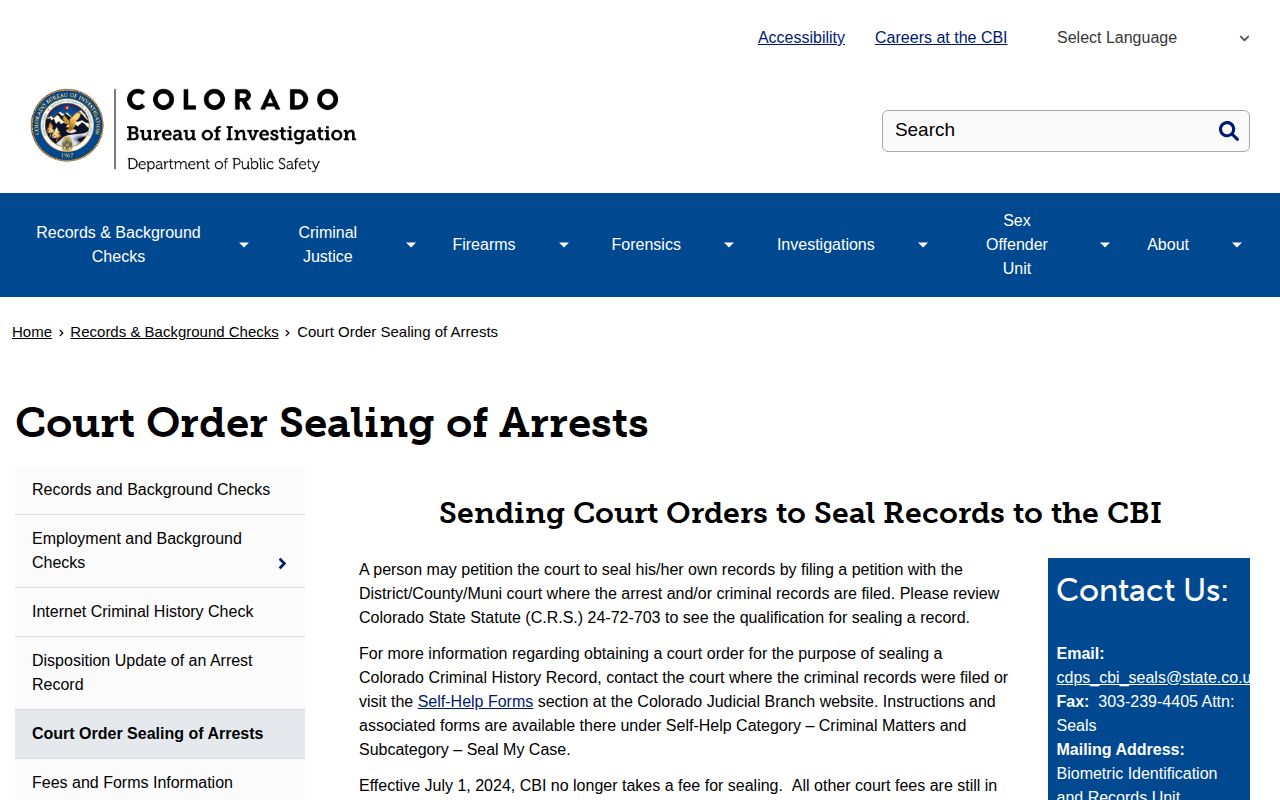
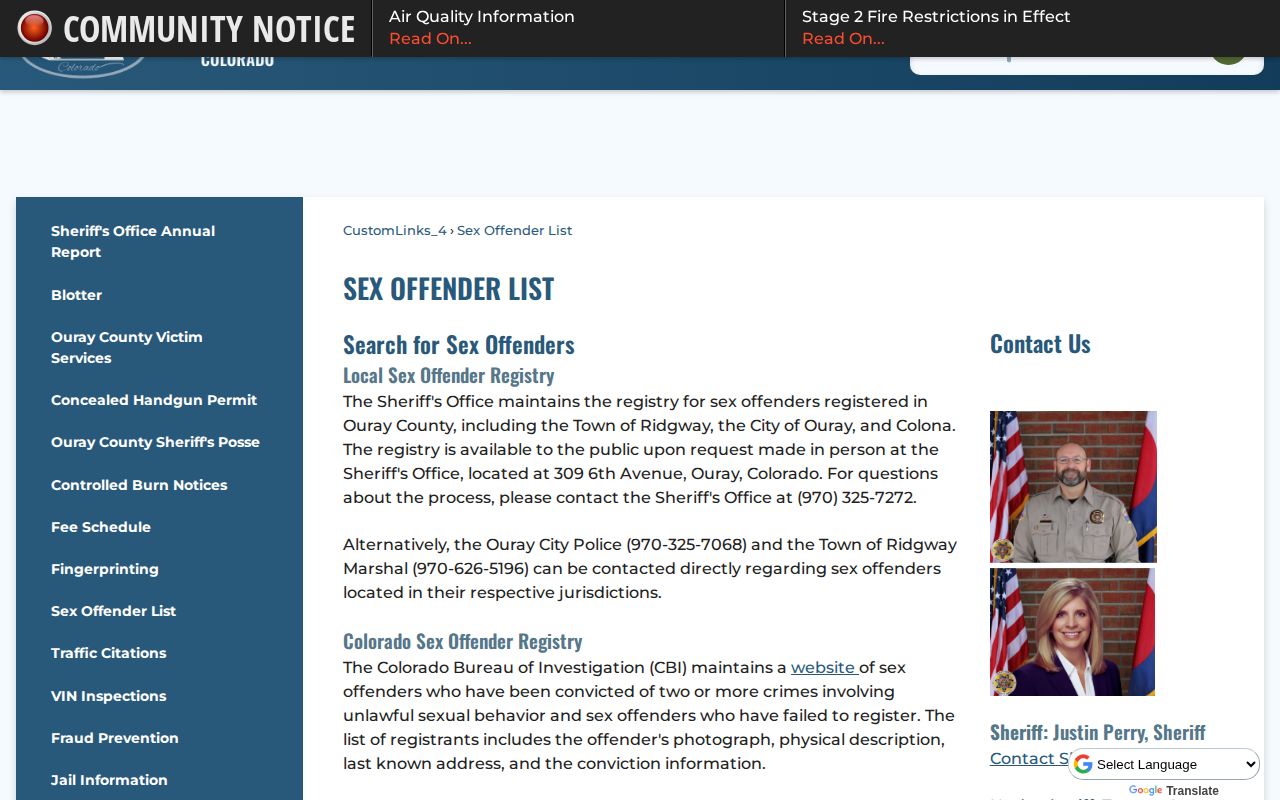
The sex offender registry is even narrower. Ouray's local sex offender page says the sheriff maintains the registry for registrants in Ouray County, Ridgway, Ouray, and Colona and that the local registry is available by in-person request at the sheriff's office. It also says CBI's registry includes photograph, physical description, last known address, and conviction information for the categories included in that registry. A registry photo does not mean every released inmate has a public photo, and it does not necessarily show the most recent jail release.
Third-Party Sites and News
Third-party mugshot and booking sites may copy public data, but they are not primary sources. A record on those sites can be outdated, incomplete, duplicated, mismatched, or presented without later case outcomes. Use them, at most, to identify dates, agencies, or case numbers that can be verified through the sheriff, Montrose jail records, Ouray court, CDOC, VINE, or another official system.
Local news releases, agency social posts, and dated blotter material can sometimes include a photo or arrest context. They should be read as a snapshot from the publication date. If the case later resulted in dismissal, acquittal, sealing, sentence completion, parole, transfer, or another release outcome, the photo source may not reflect the current legal or custody status.
Removal, Sealing, and Colorado Law
Colorado addressed commercial mugshot websites through HB 14-1047, described by the Colorado Freedom of Information Coalition as requiring commercial websites to remove a booking photo free of charge upon written request if the arrested person was not charged, charges were dropped, or the person was acquitted. That is a removal-right and access issue, not a reason to republish mugshots or rely on paid removal services.
Sealing can also change public visibility. CBI states that effective July 1, 2024, it no longer takes a sealing fee. If a case or arrest record is sealed, public systems may suppress or restrict the record even though the historical booking happened. Do not try to work around a sealing order. Use the court, CBI, sheriff, or other record custodian for correction, sealing, and access questions.
Public access limit. A booking photo may be a public record in one context and restricted in another. The safest source is the agency that maintains the original record and can explain redactions, denial, sealing, or correction.