
Projected vs Actual Release Date
A projected release date is a computed estimate or custody milestone. It is not a promise that the person will walk out at a specific hour. The actual release can change because of paperwork, court orders, parole action, detainers, holds from another agency, electronic monitoring, disciplinary changes, or records lag.
Scheduled vs actual release. A scheduled, projected, parole eligibility, mandatory release, discharge, or bond-processing date should be read in context. The legal source matters: CDOC calculates state-prison time, the court issues bond and mittimus orders, and Montrose County Jail processes local custody releases for the practical Ouray-linked jail channel.
A person held before trial often has no fixed release date. If the court has not set a bond the person can meet, or if another hold exists, there may be no public date to calculate. In that situation, the useful records are the bond order, docket, current jail status, VINE registration, and booking desk or records-office response.
How to Find an Ouray Release Date
Start with the system that owns the custody. Ouray's official sheriff page routes jail information to Montrose County Sheriff's Office, so a county-jail release check usually starts with Montrose. A state-prison release check starts with CDOC. A supervision release or revocation check may require CDOC, the parole board, probation, and Ouray court records.
- Search the Montrose current inmate list if the person may still be in local jail custody. The list is current-only, so disappearance from it is not a verified release record.
- For bond timing, review the Montrose bond page and confirm with the booking desk when funds, surety, or electronic monitoring are involved.
- For a county sentence, use the mittimus and court docket to identify the sentence and the "lawfully discharged" endpoint, then confirm with jail records.
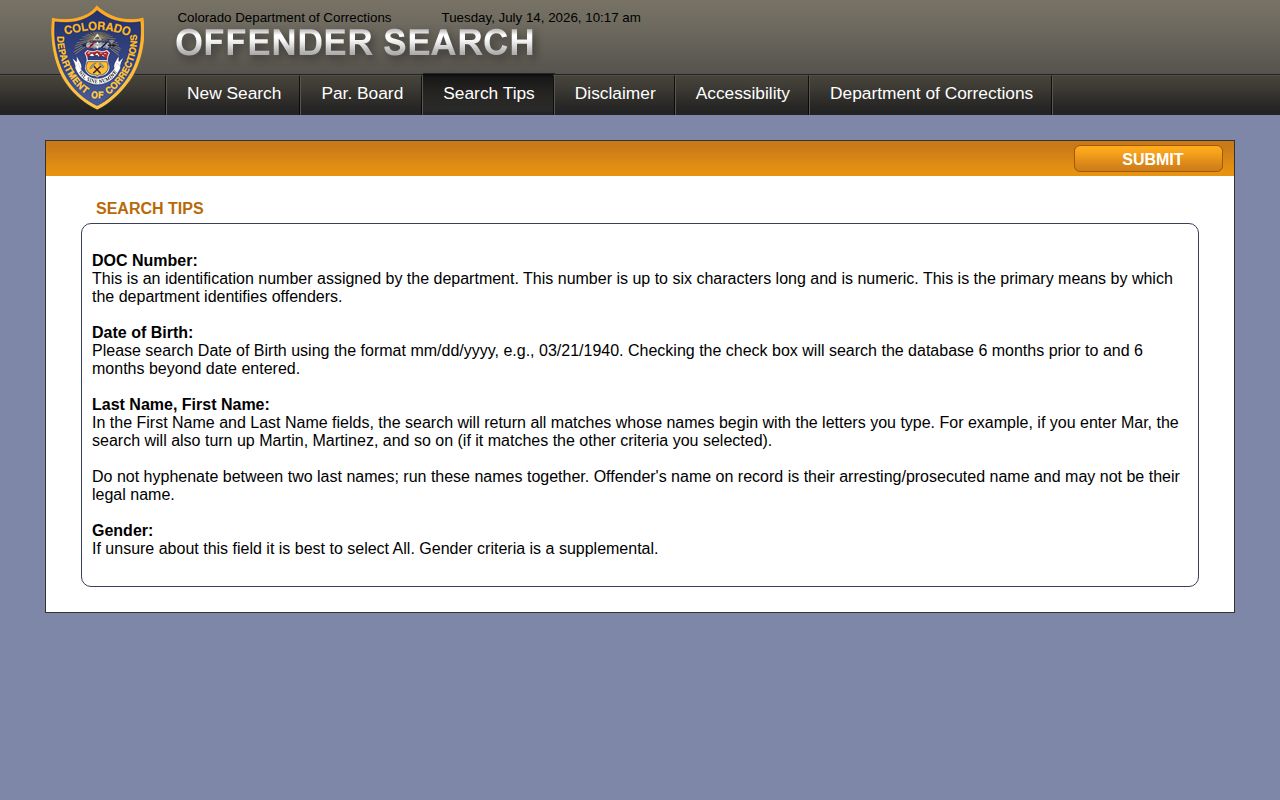
- For state prison, search the CDOC offender search. Use the DOC number first if available because CDOC search tips identify DOC number as the primary identifier.
- For parole questions, compare the CDOC record with the parole calendar and case-manager or parole-office information.
- Register with VINELink Release Check before the expected release when you need a custody-status alert.
CDOC Date Fields Need Context
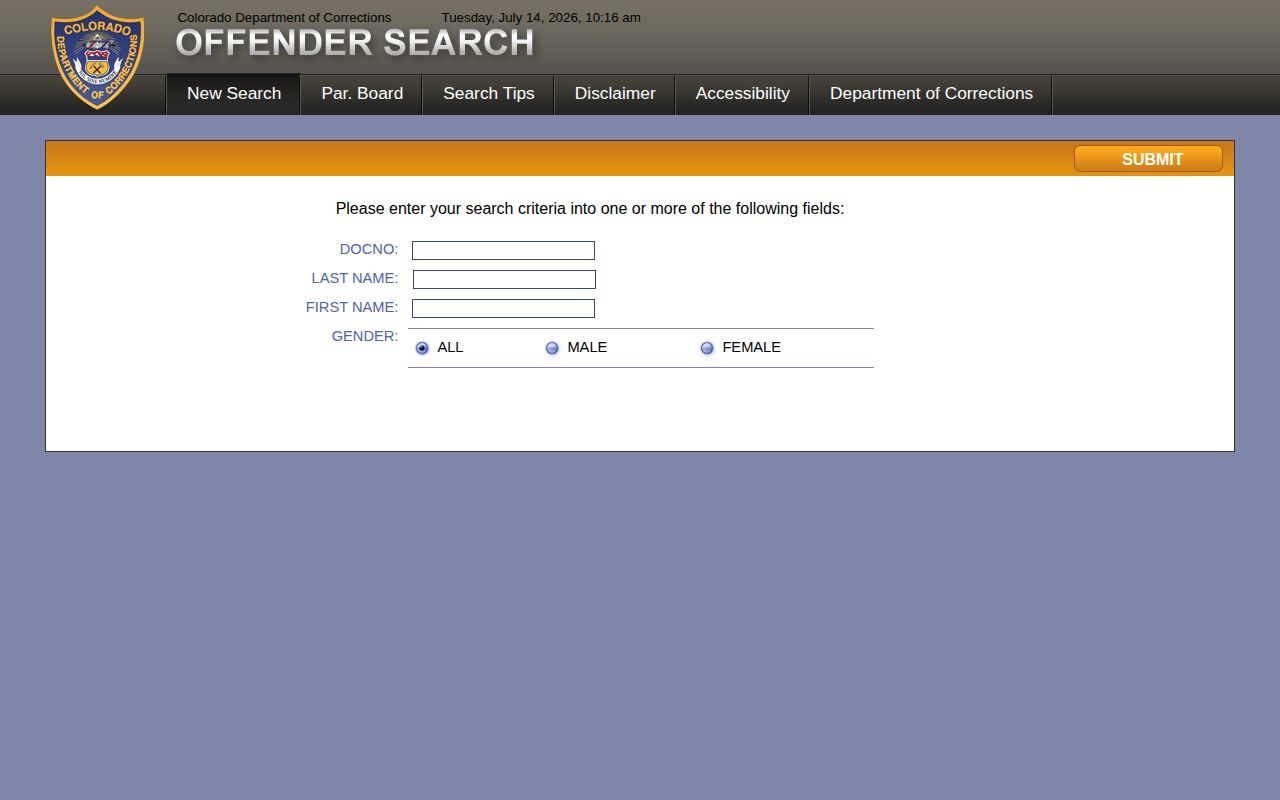
CDOC is the public starting point for Colorado state-prison release, parole, discharge, and state-offender status. This research confirmed the CDOC search form, search tips, disclaimer, and parole calendar, but did not capture a specific public offender record with an exact projected-date field label. Do not assume the record says "projected release date." Use the exact label visible in the live record, such as parole eligibility, mandatory release, release date, discharge date, or another CDOC field, and then confirm what that label means.
CDOC's disclaimer says database information may contain inaccuracies and should be confirmed. That warning belongs near any release-date explanation because a public search result can lag a court order, parole action, disciplinary update, or record correction.
Earned Time and Parole Eligibility
Colorado state-prison release computation depends on sentence length, sentence type, offense date, offense class, parole eligibility, earned time, achievement earned time, disciplinary changes, mandatory release or discharge rules, parole board action, rescission, detainers, and court orders. C.R.S. 17-22.5-403 is the parole eligibility statute and allows the executive director to extend a parole eligibility date for misconduct during incarceration. C.R.S. 17-22.5-405 addresses earned time, including up to ten days per month for certified progress and up to twelve days per month for specified lower-level felony and drug felony categories.
Do not apply a universal "85%" statement to every Colorado release date. The research notes that violent-crime parole eligibility rules changed for affected offenses committed on or after January 1, 2025, under Colorado Proposition 128. Other offenses, earlier offense dates, and different sentence structures can follow different rules. The accurate path is to compare the sentencing mittimus, offense date, statute, CDOC computation, and parole status.
Bond Release Timing in Montrose
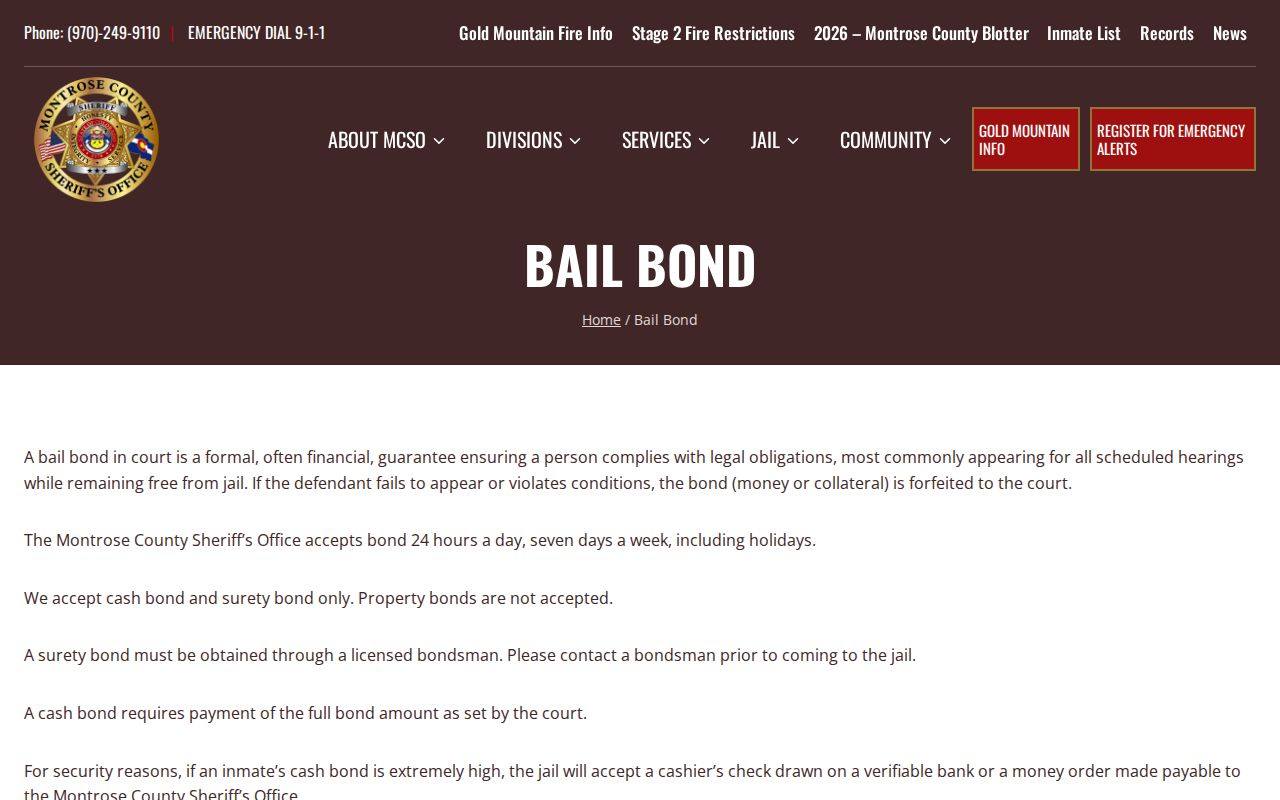
The local release-date quirk for many Ouray-linked cases is that bond processing is not the same as state-prison time computation. The Montrose bond page says bonds are accepted 24 hours a day, seven days a week, including holidays. It distinguishes cash and surety bonds from property bonds, notes the JailATM process, and says release is pending processing after funds are received.
C.R.S. 16-4-102 adds the timing rule: after qualifying PR or cash-bond conditions are met and the defendant has returned to jail, the sheriff must release within six hours unless extraordinary circumstances exist. The statute also allows a hold up to 24 hours when electronic monitoring fitting is necessary. That is a bond-processing rule, not a CDOC projected release date.
Mittimus Sentences and Discharge
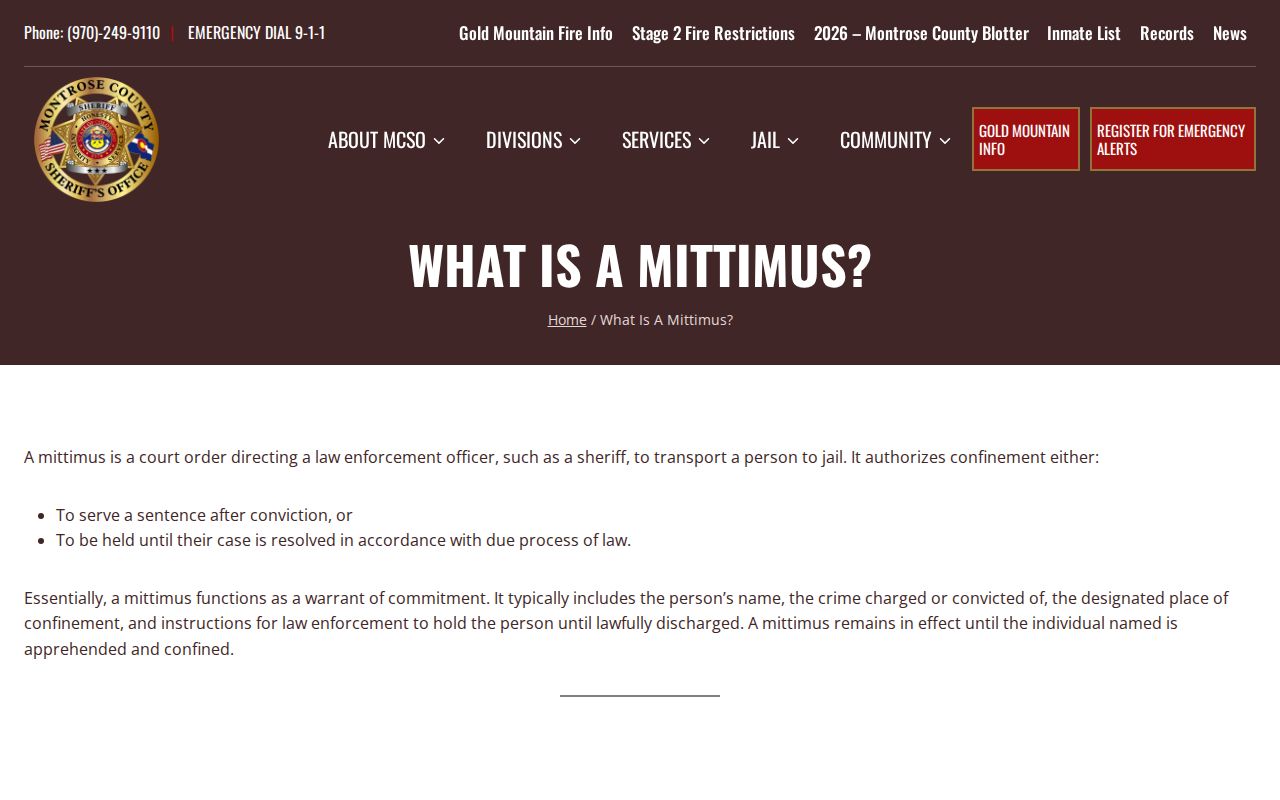
A county jail sentence release often depends on the mittimus. The Montrose mittimus page explains that a mittimus authorizes confinement to serve a sentence after conviction or to hold a person until a case is resolved. It typically includes the person's name, the crime, the designated place of confinement, and holding instructions, including holding the person until lawfully discharged.
For an Ouray County case served through the Montrose jail channel, the mittimus and court docket can explain why the person was held and what sentence or custody instruction applied. Jail records can then confirm the actual release entry, release reason, and any transfer destination. If the release involved a bond rather than a sentence, use the bond order instead of trying to calculate a sentence discharge date.
Why a Release Date Changes
Release timing changes often have a records explanation, even when the public page does not show every detail. Use the table below to decide which agency to ask next.
| Factor | How it affects the date | Best confirmation source |
|---|---|---|
| Earned time or achievement earned time | May reduce a state-prison sentence under Colorado rules | CDOC computation, case manager, offender record |
| Disciplinary misconduct | Can extend parole eligibility or affect credits | CDOC record or records contact |
| Parole action | Grant, denial, deferral, rescission, or revocation changes release timing | CDOC, parole board calendar, case manager |
| Detainer or outside hold | Release from one facility may become transfer to another agency | Jail records, court file, VINE, BOP, ICE, or receiving agency |
| Bond paperwork or electronic monitoring | Can delay local release after bond is set or paid | Montrose booking desk, bond order, court record |
Confirm the Actual Release
When the exact legal release reason matters, confirm the date with the record custodian. For Ouray Sheriff records, the fee sheet says requests must use the official records request form and that processing depends on record type, availability, redactions, and applicable Colorado law. For Montrose jail records, the Montrose records page says jail records and case reports can be requested through the Sheriff's Office public-record process, including by email to the records address listed there or at 1200 North Grand Avenue.
Use Colorado VINE as a notification and status-check layer, especially before an expected release. If VINE reports a custody change, save the displayed status and time and then compare it with the jail, court, or CDOC record. If no VINE result appears, do not treat that as proof of no custody or no release; spelling, timing, agency participation, transfer, and restricted records can affect visibility.